Introduction: The Golden Rule Every Baker Must Know
Ever baked a cake that turned out dense and flat when the recipe promised fluffy perfection? Or cookies that were tough instead of tender? You followed the recipe, used the right ingredients, and baked at the correct temperature. But something still went wrong.
The answer is almost always the same: your measurements were off.
The first and most crucial rule of baking is to measure your ingredients precisely. Unlike cooking, where you can adjust flavors on the fly, baking is a science that demands exact measurements for success. This single rule separates successful bakers from frustrated ones.
In this guide, I’ll explain why measurement is non-negotiable, how to measure properly, and what happens when you skip this step. Whether you’re a beginner or an experienced baker, this rule will transform your baking results.
Why Measurement Is the #1 Rule of Baking
“Guessing will ruin your bake.” This is the universal truth every baker learns early in their journey.
Baking is different from cooking because it relies on precise chemical reactions between ingredients. When you change the ratio—even slightly—those reactions fail, and your bake suffers.
Think of it like this:
- Cooking = creativity with flexibility (add more salt, less spice, whatever tastes good)
- Baking = chemistry with precision (exact ratios create exact results)
Here’s why measurement tops every baker’s rule list:
✅ Baking is a chemical reaction – Flour, sugar, fat, and leavening agents interact in specific ratios
✅ Small changes matter – 1 extra tablespoon of flour can make a cake dry
✅ No room for improvisation – You can’t “taste and adjust” once it’s in the oven
✅ Professional bakers agree – Every expert recipe starts with precise measurements
The Science Behind Precise Measurements
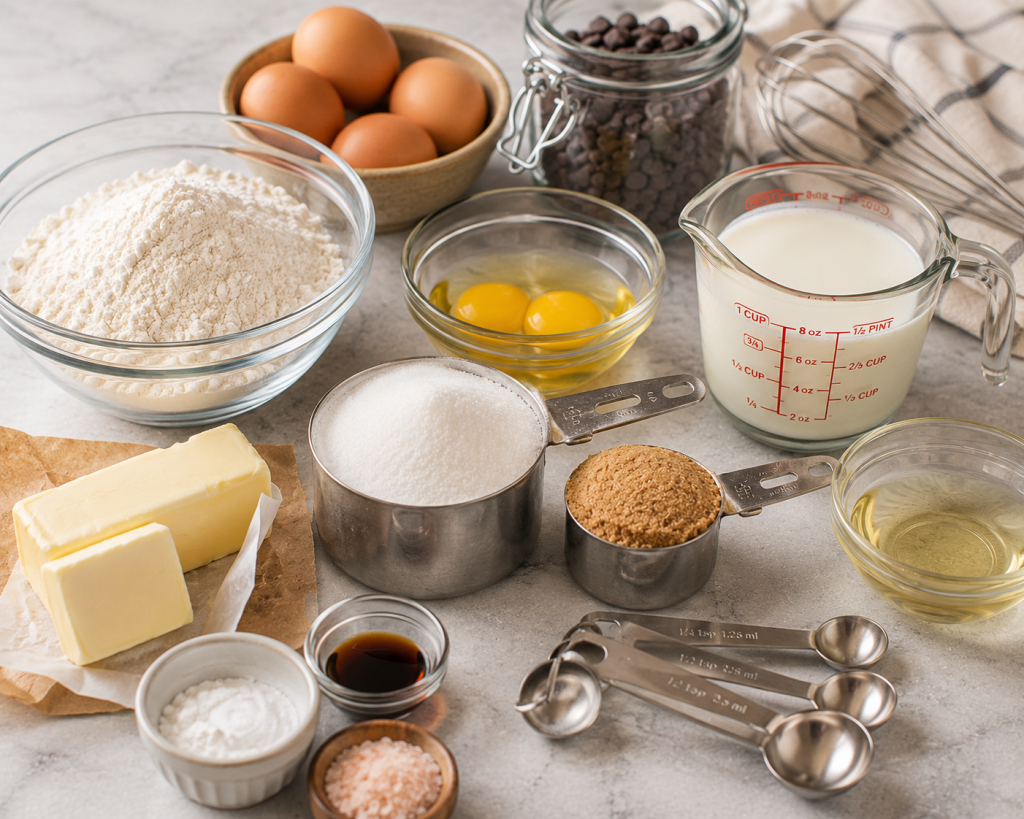
Understanding why measurement matters requires understanding baking science. Here’s what happens in your oven:
How Ingredients Interact
| Ingredient | Role in Baking | Too Much = | Too Little = |
| Flour | Provides structure | Tough, dry bake | Crumbly, weak structure |
| Sugar | Adds sweetness & moisture | Cakes too sweet, burns fast | Dry, bland taste |
| Baking Powder/Soda | Creates lift (gas bubbles) | Bitter taste, collapses | Flat, dense bake |
| Fat (butter/oil) | Creates tenderness | Greasy, heavy texture | Tough, dry results |
| Eggs | Bind ingredients + add structure | Rubberiness | Crumbly, falls apart |
When measurements are off, these roles get disrupted. The result? A bake that doesn’t rise, tastes wrong, or has the wrong texture.
The Ratio Rule
Baking follows a golden ratio. For example:
- Basic cake ratio: 1 part fat : 1 part sugar : 2 parts flour : 2 parts eggs
- Cookie ratio: More fat + sugar = softer cookie; More flour = harder cookie
When you guess measurements, you break the ratio. The chemistry fails. Your bake fails.
How to Measure Ingredients Properly
The good news? Measuring properly is easy once you learn the right technique. Here are the three best methods:
4.1 Using a Digital Scale (Best Method)
Professional bakers use scales—and you should too.
Why scales are better:
- Accuracy down to the gram
- No confusion about “cup size” (1 cup ≠ same weight in every cup)
- Faster than scooping and leveling
- Most recipes now include gram measurements
How to use a scale:
- Place empty bowl on scale
- Press “tare” to zero it out
- Add ingredient until you reach the correct gram weight
- Repeat for each ingredient
Example:
- 1 cup flour = 120–125 grams (varies by measuring method)
- 1 cup sugar = 200 grams
- 1 tablespoon baking powder = 12 grams
Investment: A good digital scale costs $20–$30 and lasts years.

4.2 Using Standard Measuring Cups & Spoons
If you don’t have a scale, use proper measuring tools—not regular kitchen cups.
What to buy:
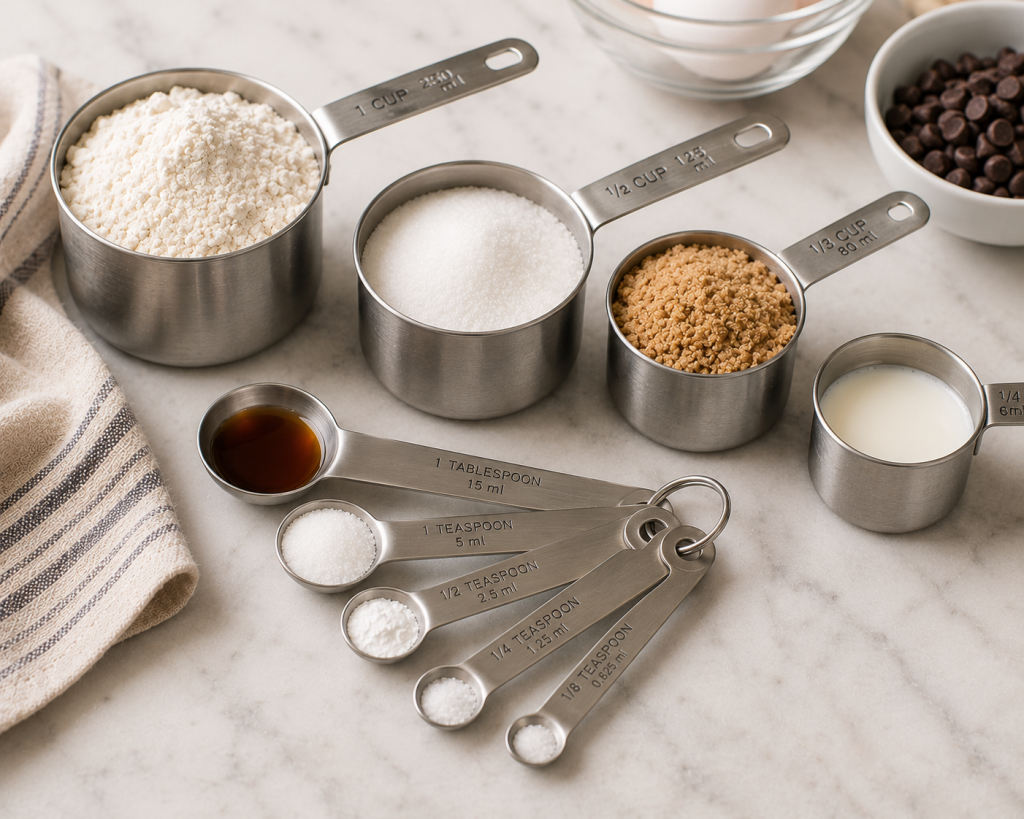
- Dry measuring cups (1 cup, ½ cup, ⅓ cup, ¼ cup) for flour, sugar
- Measuring spoons (1 tsp, ½ tsp, ¼ tsp, 1 tbsp) for baking powder, salt
- Liquid measuring cup (glass with spout) for milk, oil, water
How to measure dry ingredients (flour, sugar):
- Fluff the ingredient first (stir it in the bag)
- Spoon lightly into the measuring cup (don’t scoop directly)
- Level with a knife for exact measurement
- Don’t pack or press down unless the recipe says so
How to measure liquids:
- Place cup on flat surface
- Pour liquid until it reaches the measurement line
- Check at eye level (not from above)
4.3 Common Measuring Mistakes to Avoid
Even experienced bakers make these mistakes. Avoid them:
❌ Scooping flour directly from the bag
→ Packs flour into the cup = too much flour = dry cake
→ Fix: Spoon flour lightly, then level
❌ Using packed flour
→ Flour settles in the bag = compressed = heavier measurement
→ Fix: Fluff flour before measuring
❌ Using regular kitchen cups
→ Not standardized = inconsistent results
→ Fix: Invest in proper measuring cups ($10–$15)
❌ Not leveling off
→ Extra ingredient = wrong ratio = failed bake
→ Fix: Use a knife to level every dry measurement
❌ Measuring liquids in dry cups
→ Hard to read measurement accurately
→ Fix: Use glass liquid measuring cup

Real Consequences of Bad Measurements
What actually happens when measurements are wrong? Here are real examples:
| Measurement Error | Result |
| +2 tablespoons flour in cake | Dense, dry, doesn’t rise properly |
| -1 teaspoon baking powder | Flat cake, no lift, rubbery texture |
| +¼ cup sugar in cookies | Cookies spread too thin, burn quickly |
| -2 tablespoons butter | Tough, crumbly cookies |
| +1 egg in muffins | Rubberiness, dense texture |
These aren’t small mistakes. They ruin the entire bake.
Real story: A baker followed a chocolate cake recipe exactly but scooped flour from the bag instead of spooning. The result? A dense, dry cake that tasted like cardboard. The recipe was perfect—the measurement was wrong.
Other Essential Baking Rules (Bonus Guide)
While measurement is #1, here are 6 more crucial rules every baker should follow:
1. Temperature is Key
Never ignore the temperature mentioned in recipes. Room temperature eggs blend better. Cold butter creates flaky biscuits. Ignoring temperature = failed bake.
2. Preheat Your Oven
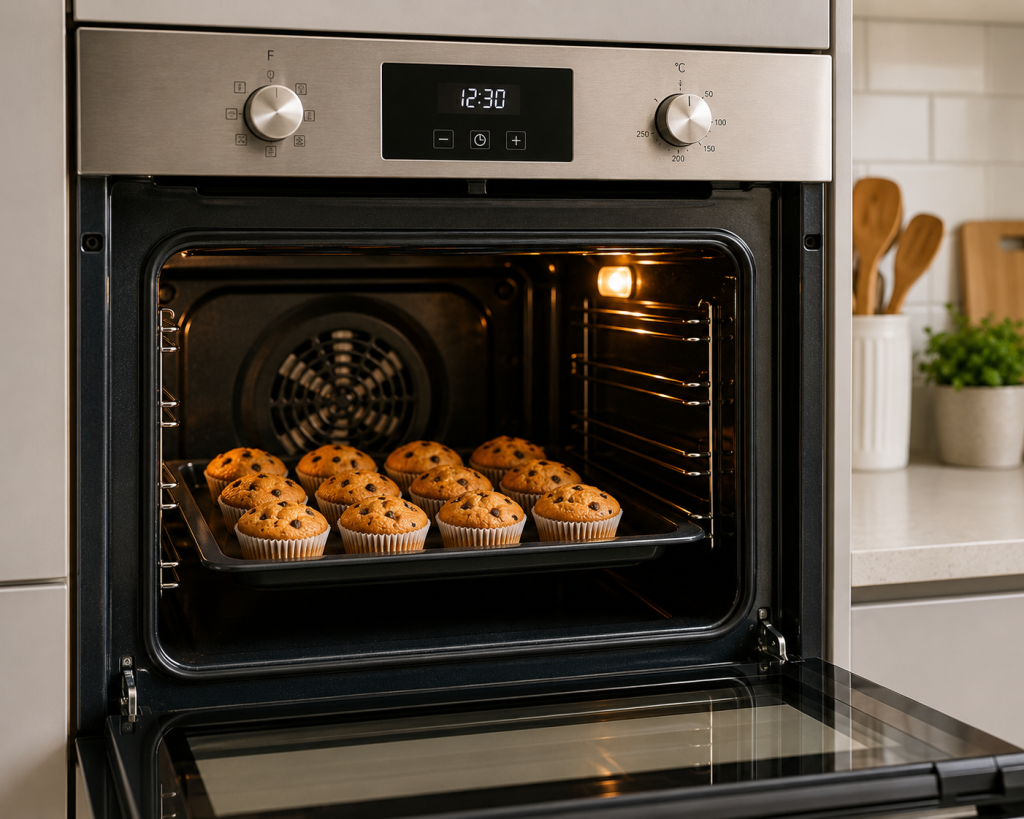
Don’t put anything in unless the oven is fully preheated (usually 10–15 minutes). Cold oven = uneven baking.
3. Read the Recipe First
Save trouble by knowing the full process before starting. Some recipes need parchment paper, special pans, or提前 preparation.
4. Don’t Open the Oven Door Early
Cakes collapse from temperature drops. Wait until the recommended time before checking.
5. Follow Instructions Exactly
Especially for first-time recipes. Don’t skip steps or change ratios until you master the original.
6. Mise en Place (French: “Everything in Its Place”)
Prepare all ingredients before starting. Measure everything first, then mix. This prevents mistakes and saves time.
Conclusion: Start with Measurement, Bake with Confidence
“Make accurate measurements” is the first rule of baking because everything else depends on it. If your measurements are wrong, even perfect technique won’t save your bake.
Here’s what you’ve learned:
- ✅ Baking is a science, not just cooking
- ✅ Measurements affect chemical reactions
- ✅ Use a scale for best accuracy (or proper measuring cups)
- ✅ Avoid common mistakes like scooping flour
- ✅ One wrong measurement can ruin the entire bake
“If you want a moist, decadent cake, don’t guess how much a teaspoon of baking powder is—get the measuring spoons.”
Your next step: Grab a digital scale ($20+) or proper measuring cups. Measure your next recipe exactly. Watch your baking transform from “homemade” to “bakery-quality.”